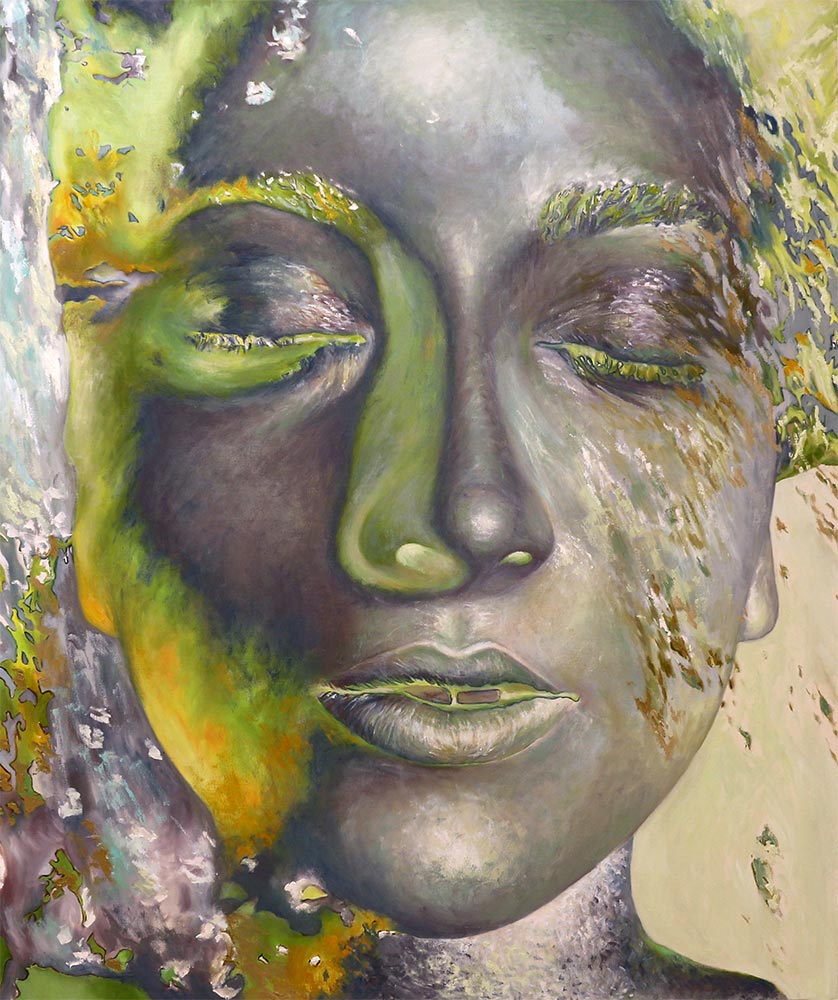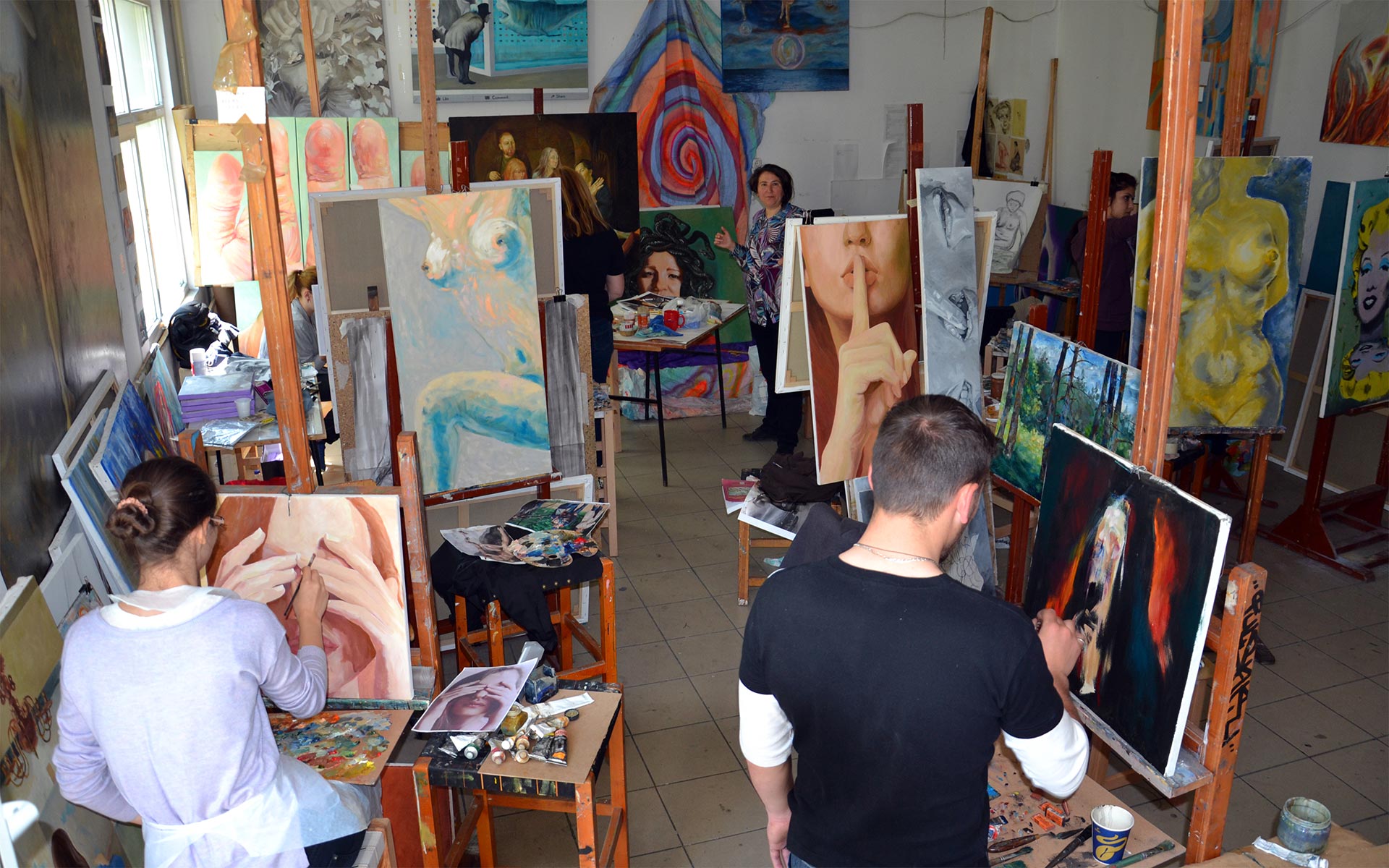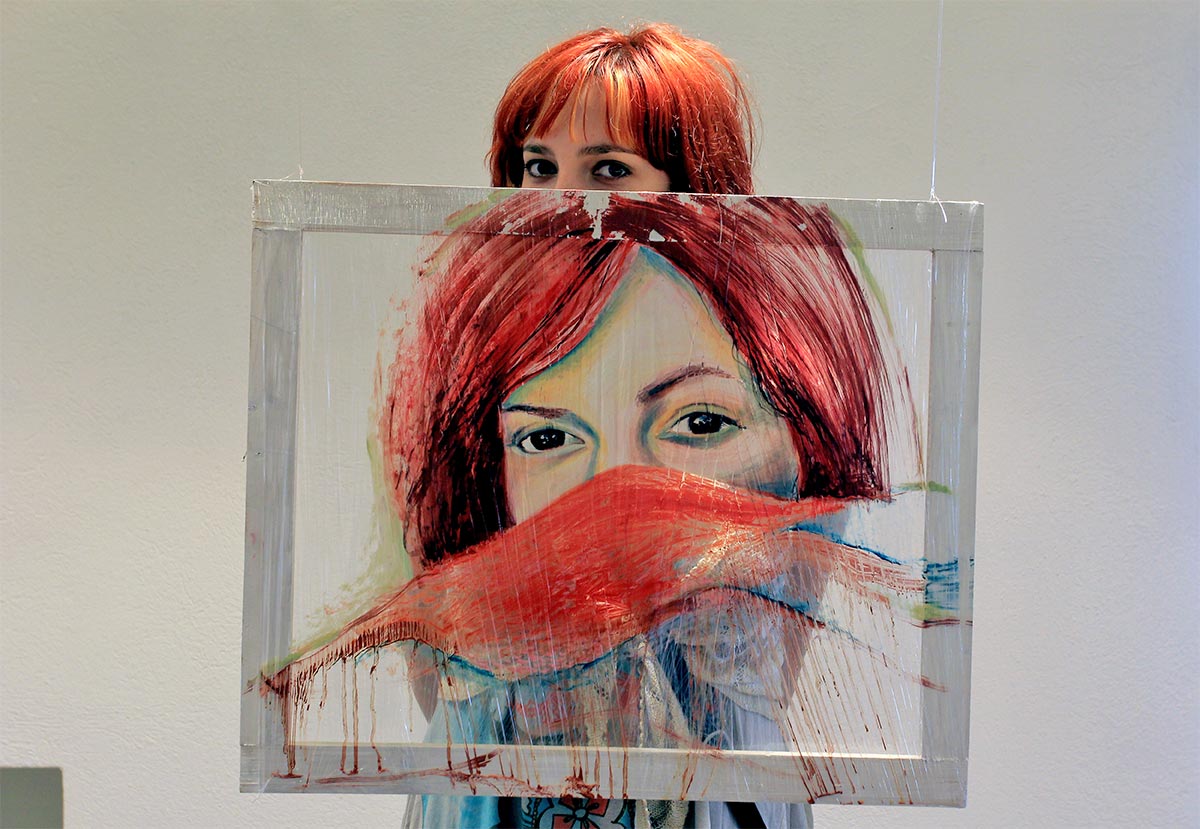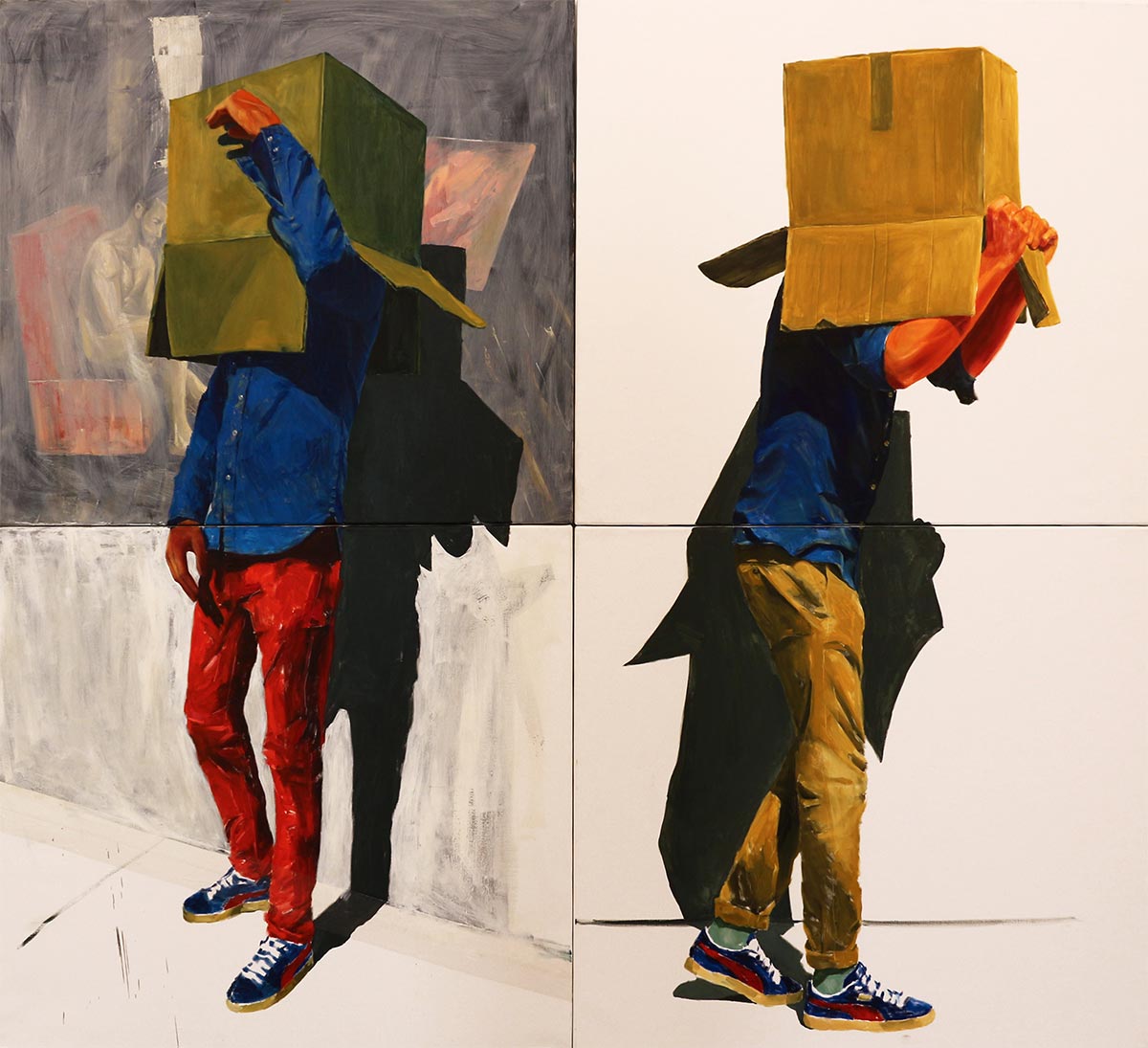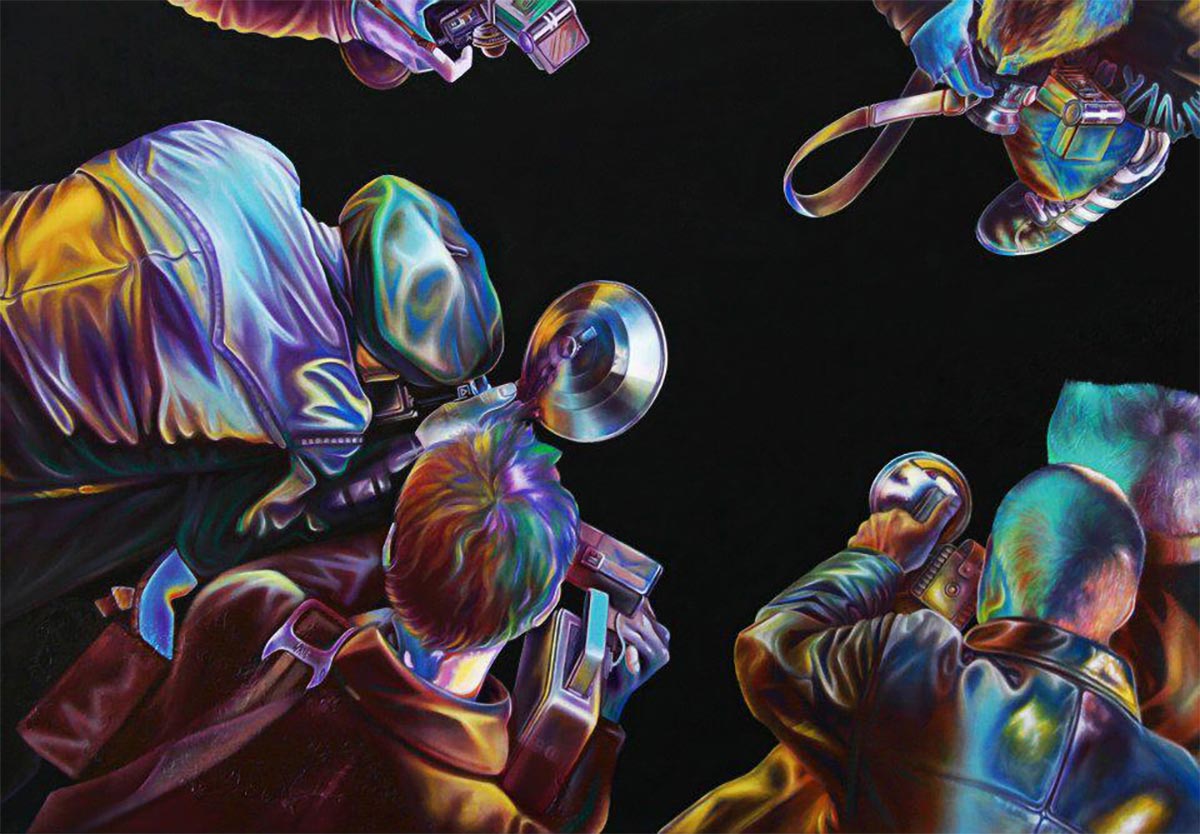
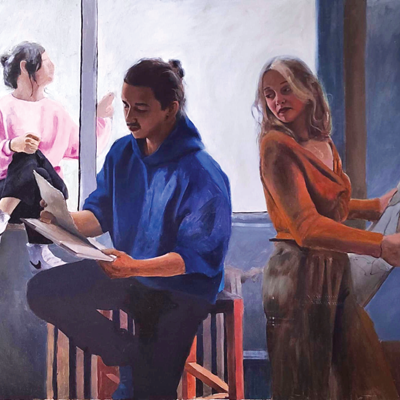
 The undergraduate study programme Fine Arts – Painting assumes the mission of cultivating and developing creative artistic personalities prepared to navigate the complexity of the contemporary art scene. Through a balanced curriculum that articulates academic rigour with freedom of expression, students are encouraged to research and deepen the theoretical and practical foundations of painting. The programme aims at the systematic acquisition of visual languages, from traditional ones to those specific to modern and contemporary epochs, stimulating the development of an individual artistic discourse. The competences acquired through courses and practical activities on drawing, colour, composition, artistic techniques and technologies, combined with an interdisciplinary vision, ensure graduates have the capacity to integrate into national and international value circuits and to establish themselves as qualified professionals in the field of visual arts.
After completing their bachelor’s studies, students may deepen their knowledge within the two‑year master’s cycle, engaging in advanced visual practices grounded in artistic research and the articulation of original concepts. The master’s programme cultivates critical and creative thinking, encouraging interdisciplinary approaches and the exploration of the frontiers of contemporary painting. By valorising tradition and integrating current tendencies, the master’s strengthens the professional autonomy of graduates and develops the competences required for professional affirmation as conceptual artists. Graduates are prepared to contribute to the national and international artistic environment, both through original creation and by assuming roles in research, coordination, and cultural leadership.
ccp.arteiasi.ro
Facebook: Specializarea Pictură Iași
Fundamental disciplines
Art History | Artistic anatomy | Digital image processing | Perspective, Descriptive Geometry | Aesthetics of the visual arts.
Specialisation courses
Drawing for Painting | Colour Study and Fundamentals of Painting | Composition Study for Painting | Sketching – Experimental Drawing | Chromatology | Trends and Manifestations in Contemporary Painting | Notions of Art Conservation | Professional Practice | Bachelor’s Thesis Preparation | Arts Management | Methodology of Creation in Painting | Materials, Processes and Procedures for Painting.
Optional courses [choose 1 of 2]: Artistic Techniques | Technology of Easel Painting;
Optional courses [choose 1 of 2]: Artistic Research | Ethics and Academic Integrity;
Optional module 1: Artistic Interferences | Expressivity in Non‑figurative Painting;
Optional module 2: Scenography | Visual Communication.
Complementary courses
Museology | Foreign Language | Physical Education and Sport.
Optional courses [choose 1 of 2]: Analysis of the Visual‑Plastic Language | Digital Writing and Processing (text, image, multimedia).
Graduates of the Fine Arts – Painting programme acquire the capacity to fully orchestrate the creative process, from rigorous documentation and selection of resources to the materialisation of their vision in paintings and drawings executed at professional standards. Through an in‑depth command of easel techniques and visual grammar, students develop an autonomous artistic discourse critically anchored in contemporary cultural realities. This training ensures both the ability to innovate within pictorial genres and the competence to manage a representative portfolio, facilitating the creator’s natural insertion into current exhibition and professional circuits.
The multidisciplinary training opens a wide spectrum of trajectories within the creative industries. Graduates are qualified to work as independent visual artists, integrating into the circuit of specialised galleries and museums, while also possessing the competences required for positions in related fields. Their visual and conceptual expertise enables access to roles in curatorship, cultural management, scenography, advertising or art education, allowing for a fluid adaptation to the dynamics of today’s art market.
The educational infrastructure is primarily configured to support the requirements of easel painting, providing students with studios arranged with specific furniture and spaces dedicated to storing working materials. This foundation is extended through specialized laboratories equipped with digital processing, scanning, printing, photography and video‑projection systems. Thus, the working environment integrates the resources needed for the deepening of established techniques while simultaneously facilitating access to modern tools for documentation and the substantiation of the artistic project